Can You Run a Business From a Shipping Container?
The short answer is yes.
Thousands of businesses operate from shipping containers every day. What started as a simple transportation asset has evolved into a practical solution for retail stores, offices, workshops, storage facilities, food-service concepts, and specialized service businesses.
For many entrepreneurs, choosing a shipping container for business use provides a faster, more affordable alternative to traditional commercial construction. Containers are durable, portable, and highly customizable, making them attractive for businesses that need functional space without the cost and complexity of a permanent building.
However, successfully operating a business from a shipping container requires more than simply placing a container on a piece of property. Owners must consider permits, utilities, climate control, modifications, customer access, and operational needs before launching.
If you're wondering whether a shipping container business is right for you, here's what you should know.
Can You Really Run a Business From a Shipping Container?
Absolutely.
Shipping containers have become popular commercial spaces because they provide a secure structure that can be adapted for many different uses.
Businesses use shipping containers as:
- Retail stores
- Pop-up shops
- Mobile offices
- Food-service locations
- Equipment storage facilities
- Workshops
- Service centers
- Ticket booths
- Agricultural facilities
- Event spaces
Depending on your business model, a container can serve as either your primary location or a supplemental space that supports existing operations.
Why Entrepreneurs Choose Shipping Containers
Many business owners are drawn to containers because they offer several advantages compared to traditional construction.
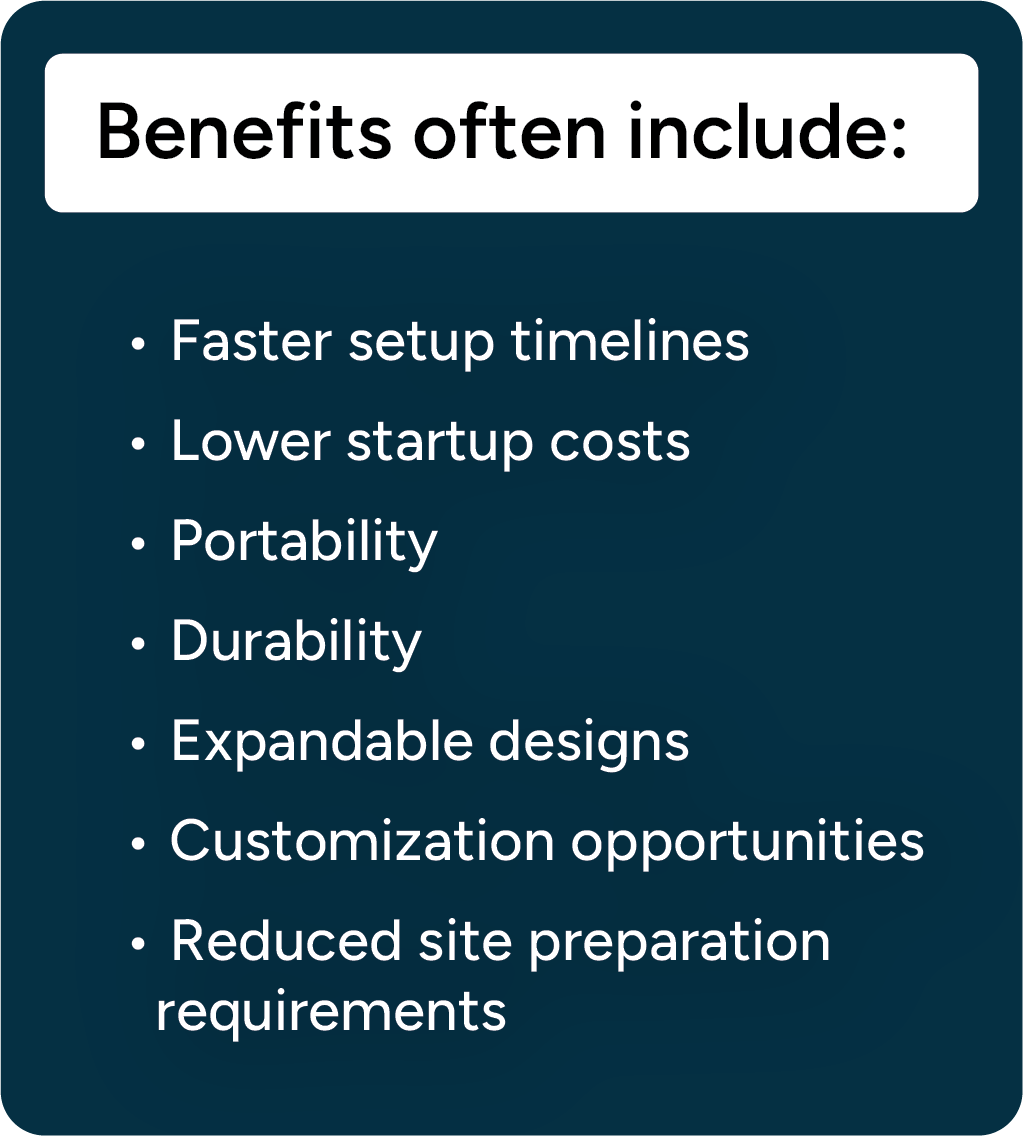
Benefits often include:
- Faster setup timelines
- Lower startup costs
- Portability
- Durability
- Expandable designs
- Customization opportunities
- Reduced site preparation requirements
Choosing a shipping container for business use can provide owners with a flexible and cost-effective alternative to traditional commercial space. Containers can also be relocated if business needs change, providing a level of flexibility that permanent buildings cannot offer.
What Businesses Work Well in Shipping Containers?
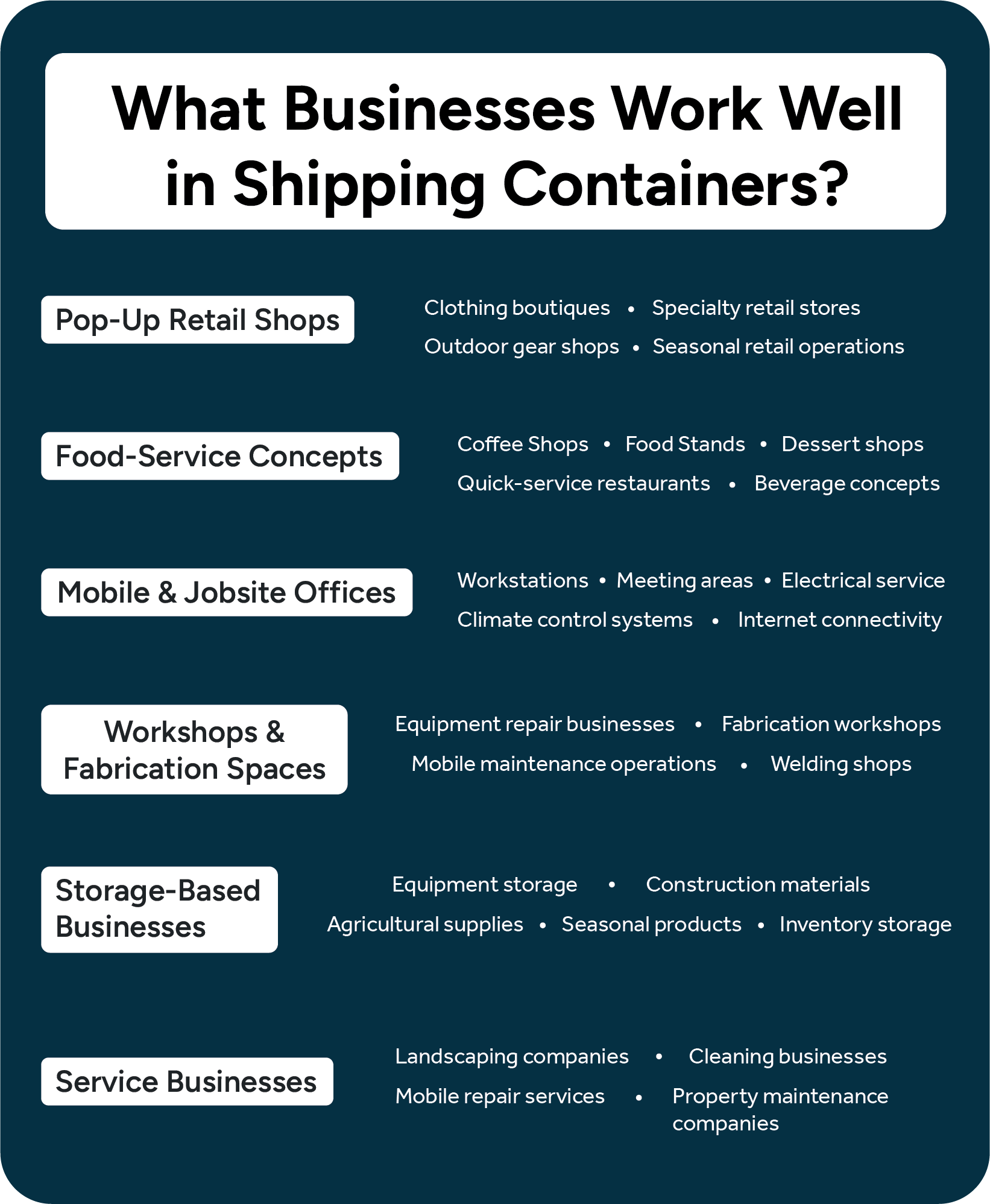
Certain business types are especially well-suited for container-based operations.
Pop-Up Retail Shops
Retailers often use containers to create unique storefront experiences.
Common examples include:
- Clothing boutiques
- Outdoor gear shops
- Specialty retail stores
- Seasonal retail operations
Container retail spaces are particularly popular at events, markets, and high-traffic commercial areas.
Food-Service Concepts
Shipping containers have become increasingly common in the food-service industry.
Businesses may include:
- Coffee shops
- Food stands
- Quick-service restaurants
- Dessert shops
- Beverage concepts
Many operators appreciate the lower construction costs compared to traditional restaurant facilities.
Mobile and Jobsite Offices
Contractors, utility providers, and industrial companies frequently use containers as office space.
These offices can include:
- Climate control systems
- Workstations
- Meeting areas
- Electrical service
- Internet connectivity
Container offices are especially useful in remote or temporary work environments.
Workshops and Fabrication Spaces
Many service businesses operate directly from modified containers.
Examples include:
- Welding shops
- Equipment repair businesses
- Mobile maintenance operations
- Fabrication workshops
Containers provide secure storage while also functioning as productive work environments.
Storage-Based Businesses
Containers are naturally suited for secure storage applications.
Businesses commonly use them for:
- Equipment storage
- Inventory storage
- Construction materials
- Agricultural supplies
- Seasonal products
Storage-focused operations often require fewer modifications than customer-facing businesses.
Service Businesses
Many service providers use containers as operational headquarters.
Examples include:
- Landscaping companies
- Cleaning businesses
- Mobile repair services
- Property maintenance companies
In these cases, the container serves as a centralized base for equipment, inventory, and daily operations.
How Much Can You Buy a Shipping Container For?
Container pricing varies based on several factors.
These may include:
- Container size
- Condition
- Age
- Geographic location
- Market demand
- Delivery distance
Used containers generally cost less than new containers, while specialty containers and modified units can cost substantially more.
Beyond the container itself, business owners should also budget for:
- Delivery
- Site preparation
- Utility installation
- Modifications
- Permits
- Equipment needs
The container is often only one portion of the total project investment.
How Hot Can a Shipping Container Get?
One of the most common concerns is temperature.
Without insulation or climate control, shipping containers can become extremely hot during warm weather. Because containers are constructed from steel, they absorb and retain solar heat throughout the day.
Temperatures inside an unmodified container can significantly exceed outdoor temperatures, particularly in direct sunlight.
Factors affecting heat buildup include:
- Geographic location
- Sun exposure
- Ventilation
- Container color
- Humidity levels
For businesses that will be occupied by employees or customers, climate control planning is essential.
Does a Shipping Container Get Cold?
Yes.
Just as containers absorb heat during the summer, they can become very cold during the winter months.
Steel transfers temperature efficiently, meaning interior conditions often mirror external weather when no insulation is present.
Cold weather challenges may include:
- Employee comfort issues
- Reduced productivity
- Frozen equipment
- Condensation buildup
- Inventory protection concerns
Businesses operating year-round typically invest in insulation and heating systems to create a more comfortable environment.
How to Make a Shipping Container Comfortable for Business Use
Most commercial container projects require modifications that improve comfort and usability.
Popular upgrades include:
- Spray foam insulation
- HVAC systems
- Windows
- Ventilation systems
- Electrical service
- Interior wall systems
- Lighting
- Flooring upgrades
The level of customization depends on how the space will be used.
A storage container may require minimal improvements, while a customer-facing retail location may need extensive modifications.
What Utilities Might a Container Business Need?
Utility requirements vary significantly based on the type of business.
Common utility considerations include:
Electrical Service
Many businesses require power for:
- Lighting
- Equipment
- HVAC systems
- Point-of-sale systems
- Computers
Internet Connectivity
Retail, office, and service businesses often depend on reliable internet access.
Water Service
Food-service operations and some workshops may require water connections.
Wastewater Systems
Depending on the business model, drainage and wastewater management may be necessary.
Understanding utility requirements early can help prevent unexpected costs later in the project.
Permits and Zoning Considerations
One of the most important planning steps involves verifying local regulations.
Before purchasing a container, business owners should research:
- Zoning requirements
- Building permits
- Occupancy regulations
- Utility requirements
- Signage rules
- Site development standards
Regulations vary by municipality, and container projects may face different requirements depending on how the space will be used.
Working with local planning authorities early in the process can help avoid delays.
Site Selection Matters
Even the best container design can struggle if placed in the wrong location.
Important site considerations include:
- Customer visibility
- Traffic patterns
- Parking availability
- Utility access
- Delivery access
- Future expansion opportunities
The location should support both customer convenience and operational efficiency.
Equipment Needed for Container Businesses
The equipment required depends on the business type.
Examples may include:
- Commercial kitchen equipment
- Retail fixtures
- Material handling equipment
- Fabrication equipment
- Office furniture
- Storage systems
- Security equipment
- HVAC systems
Many container projects involve both the container itself and the equipment needed to operate successfully.
Container Business Use-Case Gallery
Popular container business applications include:
- Coffee shops
- Retail boutiques
- Contractor offices
- Equipment rental operations
- Landscaping businesses
- Mobile workshops
- Equipment repair centers
- Agricultural operations
- Inventory storage facilities
- Event vendor spaces
- Security offices
- Training facilities
The versatility of containers continues to create opportunities across a wide range of industries.
How Equipment Leasing Can Support Container Business Launches
Starting a business often requires balancing multiple expenses at the same time.
In addition to the container itself, owners may need:
- Modification services
- HVAC systems
- Commercial equipment
- Material handling equipment
- Business-use equipment needed for daily operations
Commercial equipment leasing can help businesses access revenue-producing equipment while preserving cash for other startup expenses.
Depending on the project, leasing options may help support equipment acquisition without requiring large upfront expenditures.
This can be especially valuable for growing businesses that need equipment to begin generating revenue quickly.
Container Business Readiness Checklist
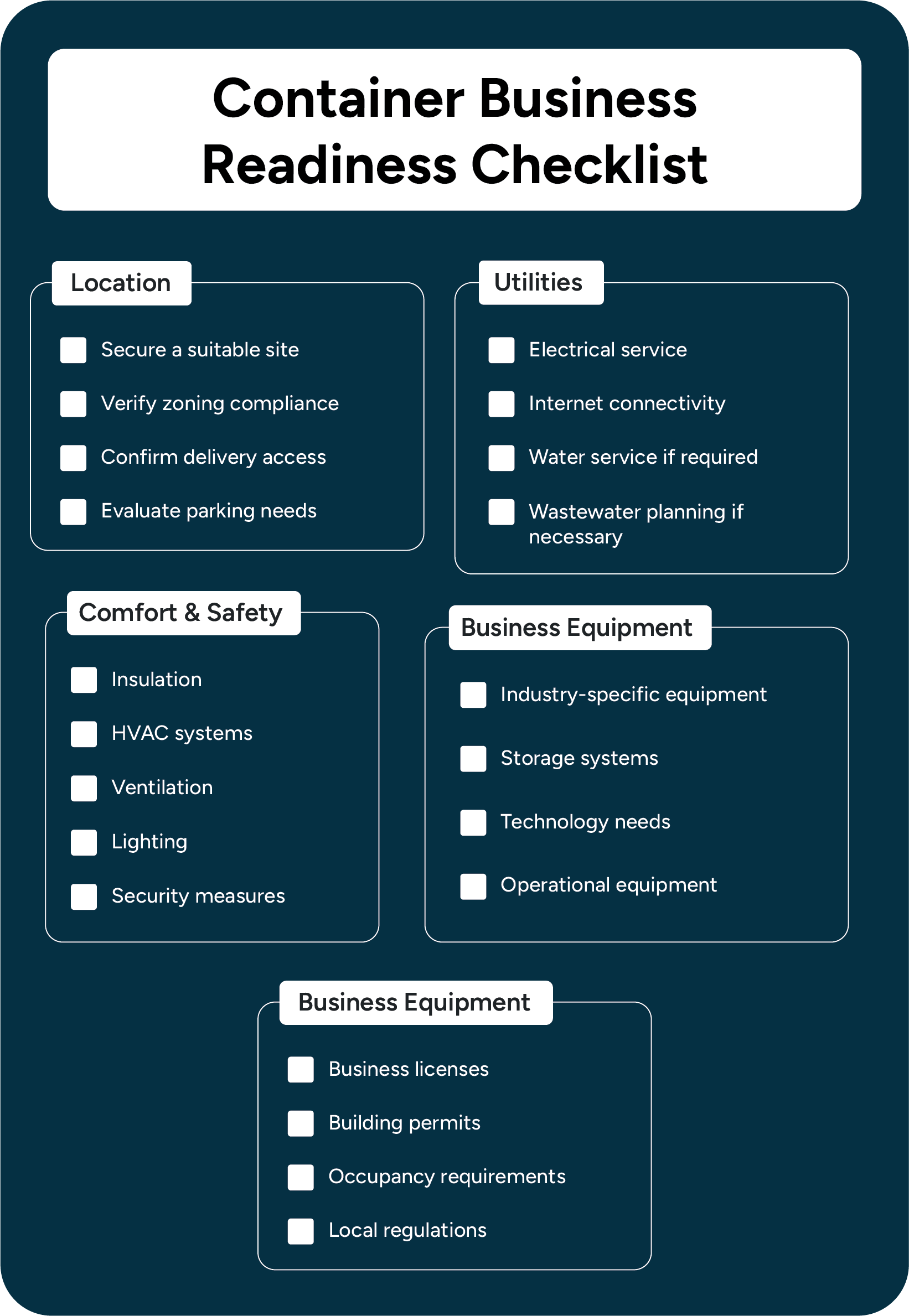
Before launching, review the following checklist:
Location
- Secure a suitable site
- Verify zoning compliance
- Confirm delivery access
- Evaluate parking needs
Utilities
- Electrical service
- Internet connectivity
- Water service if required
- Wastewater planning if necessary
Comfort and Safety
- Insulation
- HVAC systems
- Ventilation
- Lighting
- Security measures
Business Equipment
- Industry-specific equipment
- Storage systems
- Technology needs
- Operational equipment
Compliance
- Business licenses
- Building permits
- Occupancy requirements
- Local regulations
Planning Worksheet for Utilities, Permits, and Equipment
Before purchasing a container, answer the following questions:
Utilities
- Will power be required?
- Is internet access necessary?
- Will water or plumbing be needed?
Permits
- Does local zoning allow container businesses?
- Are occupancy permits required?
- What inspections may be necessary?
Equipment
- What equipment is required to operate?
- Which equipment directly generates revenue?
- What modifications are necessary before opening?
Operations
- How many employees will use the space?
- Will customers visit the location?
- How will deliveries be handled?
Answering these questions early can simplify the planning process and improve project outcomes.
Why Many Business Owners Work With Clicklease
Container-based businesses often require more than just a container. Many projects involve equipment, modifications, and operational assets that help generate revenue.
Clicklease helps businesses access revenue-producing equipment through commercial equipment leasing with fixed lease terms designed to support growth.
Whether you're building a mobile workshop, opening a retail container location, creating a jobsite office, or equipping a container-based service business, commercial equipment leasing may help preserve working capital for other important launch expenses.

Is a Shipping Container Business Right for You?
Yes, you can run a business from a shipping container, and many entrepreneurs successfully do so across a wide range of industries.
The key is understanding the practical realities of container ownership. Climate control, utilities, permits, site selection, equipment needs, and customization all play important roles in determining whether a container-based business will succeed.
With proper planning and the right equipment in place, a shipping container can become far more than a storage box. It can serve as the foundation for a growing and profitable business.
Ready to launch your shipping container business? Apply now for equipment leasing with Clicklease.