Profitable Shipping Container Business Ideas for Equipment Sellers and Entrepreneurs
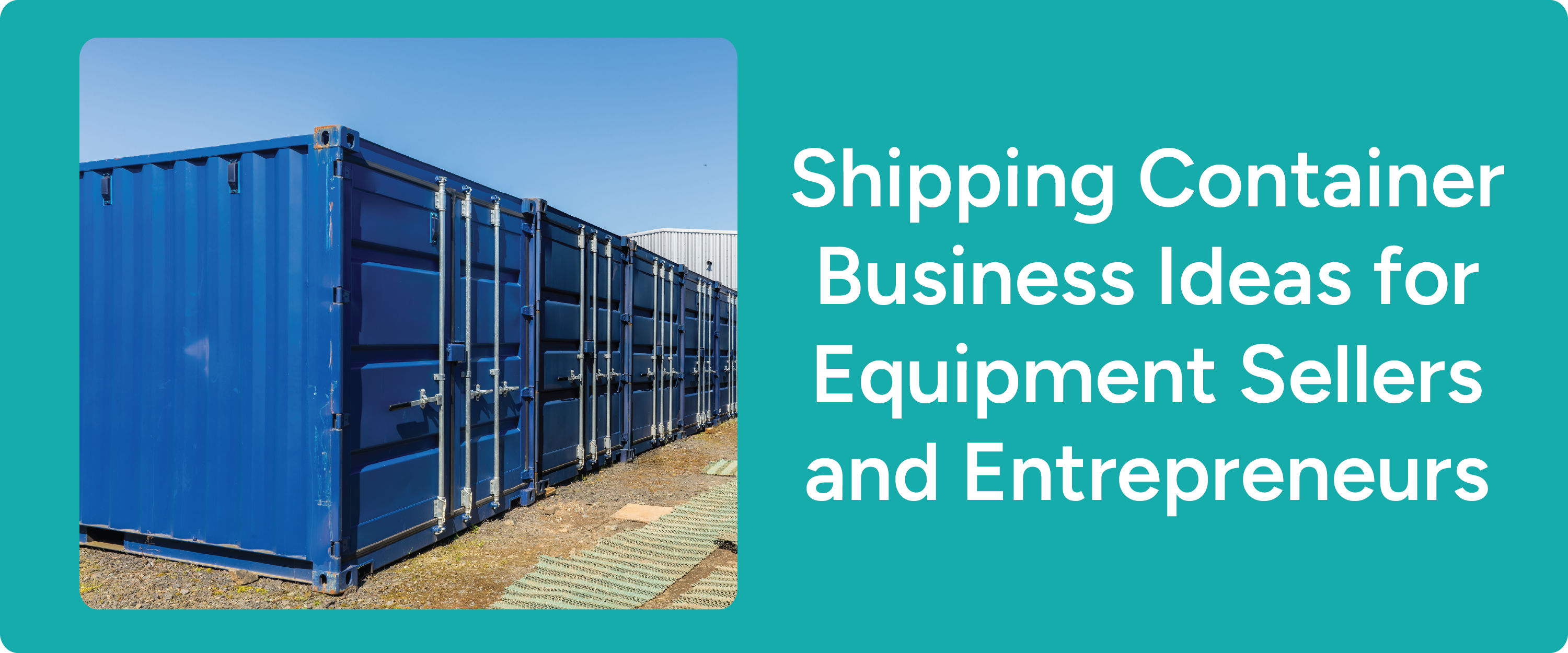
Shipping containers have become one of the most versatile assets in modern business. While originally designed for transporting goods across oceans, containers now serve as storage units, offices, retail spaces, workshops, agricultural facilities, and custom commercial structures.
For entrepreneurs, shipping containers can create multiple revenue opportunities. For equipment sellers, containers often become part of larger business projects that require equipment, modifications, and commercial equipment leasing solutions.
Whether you're looking to launch a shipping container business or help customers complete container-based projects, understanding the most practical business models can help you identify opportunities and generate long-term revenue.
Why Shipping Container Businesses Continue to Grow
Businesses across many industries need affordable, durable, and portable space solutions. Shipping containers offer a unique combination of strength, mobility, and customization potential.
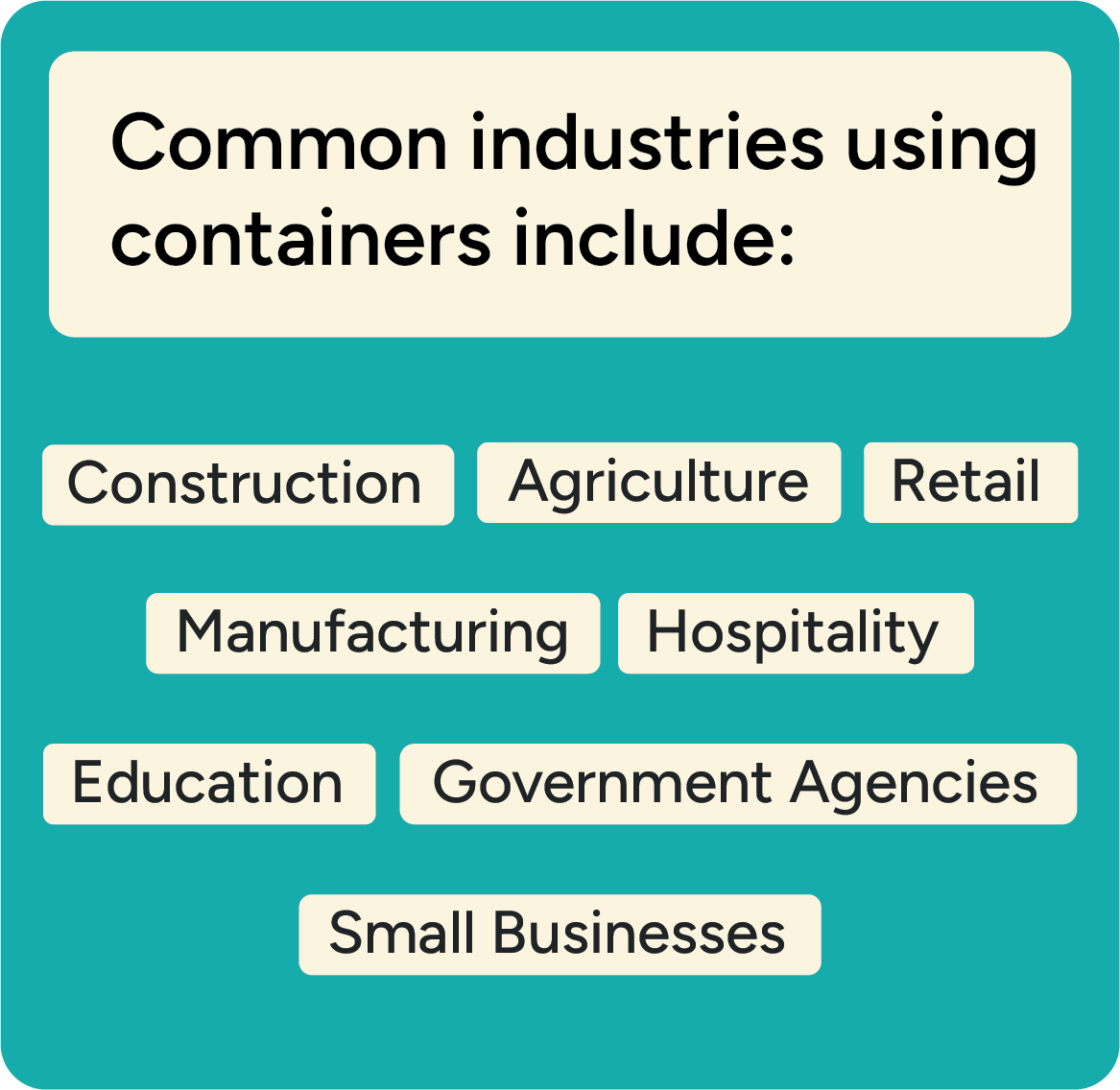
Common industries using containers include:
- Construction
- Agriculture
- Manufacturing
- Retail
- Hospitality
- Education
- Government agencies
- Small businesses
Because containers can be modified for countless purposes, entrepreneurs continue discovering new ways to create profitable businesses around them.

What Are the Most Profitable Shipping Container Business Ideas?
The most successful container businesses typically solve a specific operational challenge for customers. Some focus on storage, while others generate value through customization and specialized services.
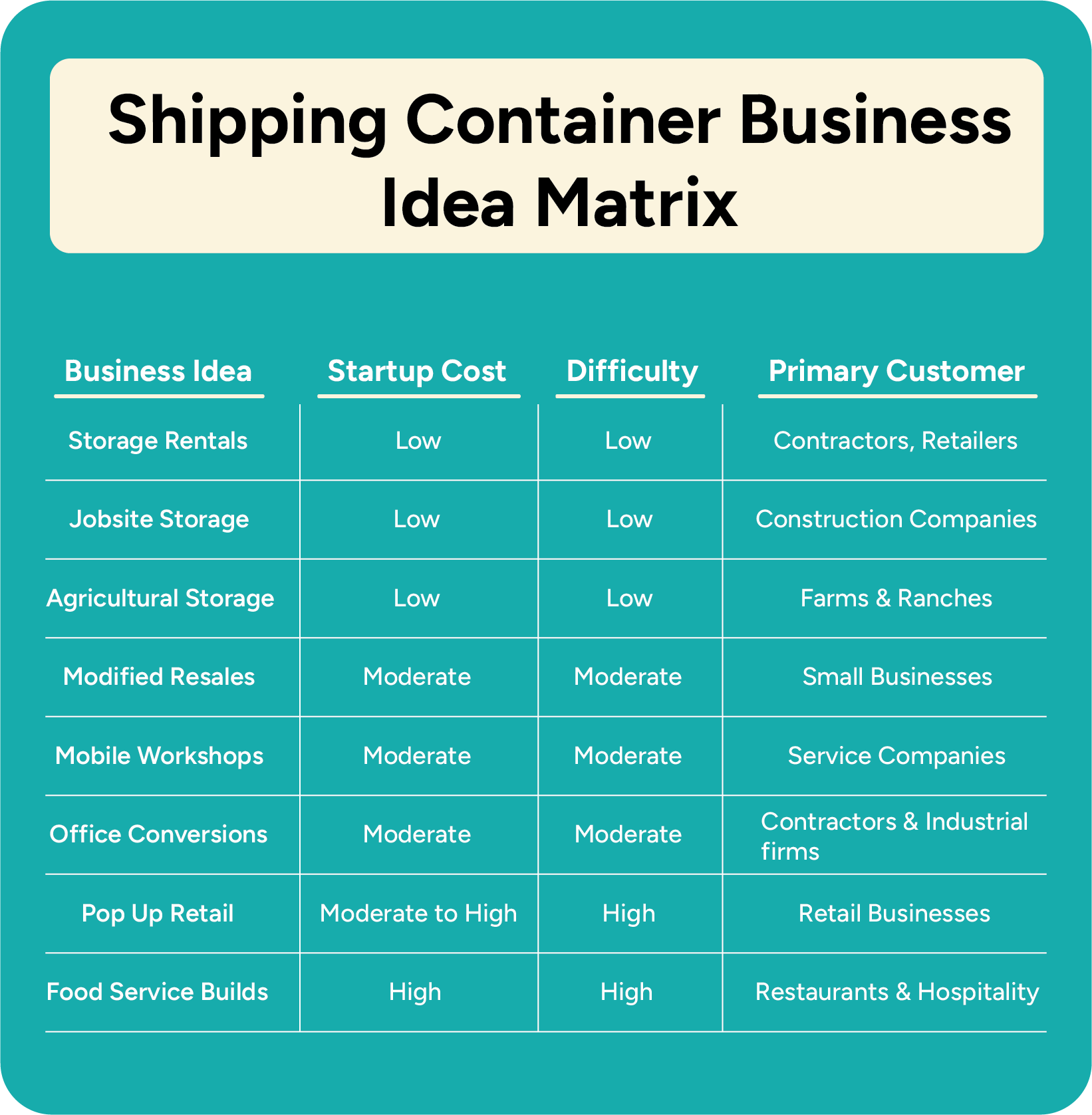
Below are several practical shipping container business ideas and what each requires to get started.
Storage Container Rentals
One of the simplest container business models involves renting storage containers to businesses that need temporary or long-term storage.
Customer Need
Businesses often require secure storage without investing in permanent structures.
Common customers include:
- Construction companies
- Retailers
- Schools
- Municipal agencies
- Agricultural operations
Equipment and Requirements
- Container inventory
- Delivery equipment or transportation partners
- Secure storage yard
- Basic maintenance tools
Startup Complexity
Low to moderate
Cash Flow Considerations
Rental income creates recurring monthly revenue, which can help stabilize cash flow over time.
Jobsite Storage Containers
Construction companies frequently need secure on-site storage for tools, materials, and equipment.
Customer Need
Protection against theft, weather damage, and jobsite clutter.
Equipment and Requirements
- Standard shipping containers
- Delivery trucks or logistics partnerships
- Locking and security upgrades
Startup Complexity
Low
Cash Flow Considerations
Construction projects often require containers for several months, creating predictable rental revenue.
Container Office Conversions
Portable offices remain one of the most popular container modifications.
Customer Need
Businesses need affordable office space at job sites, industrial facilities, and remote locations.
Equipment and Requirements
- Electrical systems
- HVAC equipment
- Insulation materials
- Windows and doors
- Interior finishing tools
Startup Complexity
Moderate
Cash Flow Considerations
Modified office containers typically command higher margins than standard container sales.
Pop-Up Retail Spaces
Retailers increasingly use containers as temporary or permanent storefronts.
Customer Need
Businesses want affordable retail space with a unique appearance.
Equipment and Requirements
- Structural modification equipment
- Welding equipment
- Electrical systems
- Interior buildout materials
- Exterior branding capabilities
Startup Complexity
Moderate to high
Cash Flow Considerations
Projects are often larger and may generate substantial revenue per transaction.
Food Service Container Builds
Food entrepreneurs and hospitality businesses frequently convert containers into food service facilities.
Customer Need
Restaurants, coffee shops, and event vendors often seek lower-cost alternatives to traditional construction.
Equipment and Requirements
- Commercial kitchen equipment
- Ventilation systems
- Plumbing systems
- Electrical installations
- Structural modifications
Startup Complexity
High
Cash Flow Considerations
These projects can produce significant project revenue but may require longer production timelines.
Agricultural Storage Solutions
Farmers and agricultural businesses use containers to protect supplies, feed, tools, and equipment.
Customer Need
Weather-resistant storage that can be placed directly on agricultural property.
Equipment and Requirements
- Standard containers
- Ventilation upgrades
- Delivery equipment
Startup Complexity
Low
Cash Flow Considerations
Agricultural customers often generate repeat business as operations expand.
Mobile Workshops
Containers can be transformed into portable maintenance facilities and service workshops.
Customer Need
Field service businesses require organized workspaces that travel with operations.
Equipment and Requirements
- Workbenches
- Shelving systems
- Electrical systems
- Lighting
- Tool storage solutions
Startup Complexity
Moderate
Cash Flow Considerations
Customization increases project value and can improve profitability.
Modified Container Resales
Some entrepreneurs purchase used containers, upgrade them, and resell them at a higher value.
Customer Need
Businesses want ready-to-use solutions without managing modifications themselves.
Equipment and Requirements
- Fabrication equipment
- Welding equipment
- Painting equipment
- Material handling equipment
Startup Complexity
Moderate
Cash Flow Considerations
Revenue is project-based rather than recurring, making inventory management especially important.
Who Buys or Uses Shipping Containers for Business Purposes?
Shipping containers serve a surprisingly broad customer base.
Common business users include:
- Construction contractors
- Property managers
- Agricultural operations
- Manufacturers
- Retail businesses
- Restaurants
- Event companies
- Utility providers
- Government agencies
- Educational institutions
Understanding your target customer can help determine which container services offer the greatest opportunity in your market.
What Equipment Is Needed for Container Modification?
Entrepreneurs interested in customization services often require specialized equipment.
Common modification equipment includes:
- Welding machines
- Plasma cutters
- Grinders
- Air compressors
- Forklifts
- Cranes
- Electrical installation tools
- Painting equipment
- Fabrication tables
- Material handling equipment
The scope of your modifications will determine how much equipment is necessary to support operations.
Shipping Container Business Idea Matrix
Container Use Case Gallery
Container projects continue to expand into new industries and applications.
Popular uses include:
- Equipment storage
- Tool storage
- Temporary offices
- Security stations
- Retail storefronts
- Coffee shops
- Food service operations
- Mobile workshops
- Agricultural supply storage
- Disaster response facilities
- Training facilities
- Inventory overflow storage
Many businesses begin with a simple storage container and later expand into more customized solutions.
How Sellers Can Help Customers Move Forward With Container Projects
Many container projects involve more than the container itself. Customers often need modifications, installation services, fabrication equipment, or other business equipment to complete their project.
Sellers can improve customer outcomes by discussing the full scope of the project early in the sales process.
Helpful questions include:
- What will the container be used for?
- Will modifications be required?
- What equipment is necessary to complete the project?
- Is the project expected to generate revenue?
- What timeline is the customer working toward?
These conversations can help uncover opportunities to support the customer's broader business goals.
Seller Checklist for Quoting Container Projects
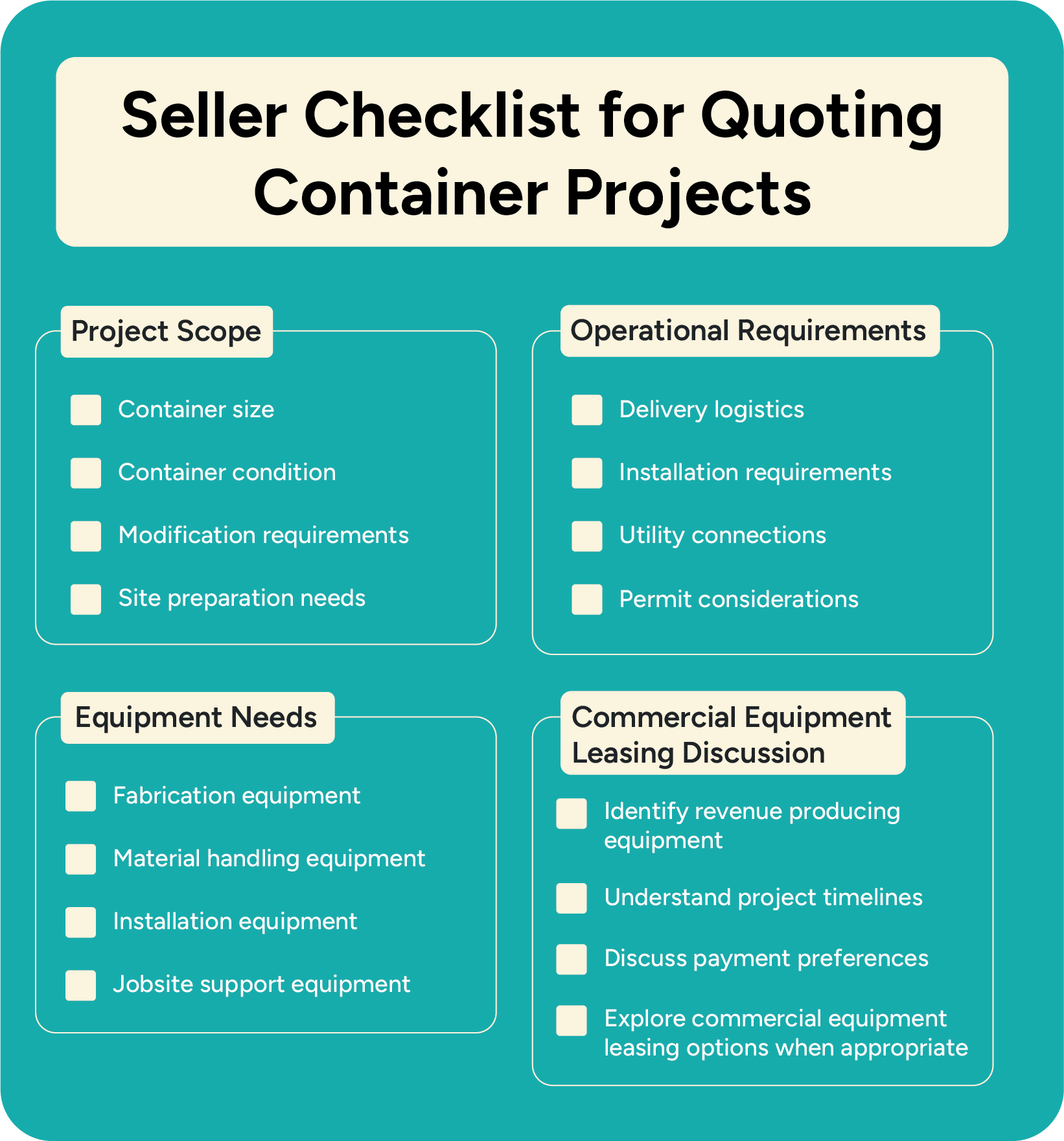
Before providing a quote, consider the following:
Project Scope
- Container size
- Container condition
- Modification requirements
- Site preparation needs
Operational Requirements
- Delivery logistics
- Installation requirements
- Utility connections
- Permit considerations
Equipment Needs
- Fabrication equipment
- Material handling equipment
- Installation equipment
- Jobsite support equipment
Commercial Equipment Leasing Discussion
- Identify revenue-producing equipment
- Understand project timelines
- Discuss payment preferences
- Explore commercial equipment leasing options when appropriate
How Commercial Equipment Leasing Can Support Container Projects
Many businesses want to move forward with container projects, but may prefer preserving working capital for other operational needs.
Commercial equipment leasing can help customers access revenue-producing equipment while creating opportunities for sellers to support larger projects.
This may apply to:
- Modified container offices
- Mobile workshops
- Fabrication equipment
- Material handling equipment
- Business-use container solutions
Providing commercial equipment leasing options can help simplify purchasing decisions and reduce delays that might otherwise prevent a project from moving forward.
Why Equipment Sellers Partner With Clicklease
When container projects involve business-purpose equipment, offering commercial equipment leasing solutions can become an important part of the customer experience.
Clicklease helps equipment sellers provide access to revenue-producing equipment through commercial equipment leasing with fixed lease terms designed to support business growth.
By incorporating commercial equipment leasing into the sales process, sellers may be able to:
- Support larger project opportunities
- Help customers move forward more quickly
- Improve overall customer experience
- Create additional revenue opportunities
Whether you're selling modification equipment, material handling equipment, mobile workshop solutions, or container-based business assets, Clicklease can help support equipment access for qualified business customers.
To learn more about how Clicklease supports equipment sellers and growing businesses, visit Clicklease.com or call 888-509-5592.
Building a Profitable Shipping Container Business
Shipping containers offer entrepreneurs and equipment sellers a wide variety of business opportunities. From simple storage rentals to highly customized commercial structures, containers continue to create value across numerous industries.
The most successful businesses focus on solving real customer challenges, understanding project requirements, and creating straightforward paths for customers to move from planning to implementation. By combining the right business model with strong customer support and commercial equipment leasing options, container businesses can position themselves for long-term growth.
Ready to grow your shipping container business? Apply now with Clicklease to access the equipment you need.