Shipping Container Business Ideas for New Entrepreneurs
Starting a business can feel overwhelming, especially when commercial real estate costs, construction timelines, and equipment expenses begin adding up. That's one reason shipping containers have become increasingly popular among entrepreneurs looking for creative and practical ways to launch a business.
Shipping containers offer a durable, customizable structure that can support a wide variety of business models. From retail concepts and mobile offices to workshops and event activations, containers provide opportunities for entrepreneurs to start smaller, test ideas, and scale as demand grows.
If you’re exploring shipping container business ideas for beginners, these realistic options can help you turn an idea into a revenue-generating business.
Why Entrepreneurs Are Choosing Shipping Containers
Containers provide several advantages for startup businesses.
Many entrepreneurs appreciate:
- Lower startup costs compared to traditional construction
- Faster setup timelines
- Portability and mobility
- Customization options
- Durable construction
- Expansion opportunities
A shipping container may not eliminate the need for planning, permits, or equipment, but it can simplify many aspects of launching a business.
What Shipping Container Business Ideas Are Realistic for Beginners?
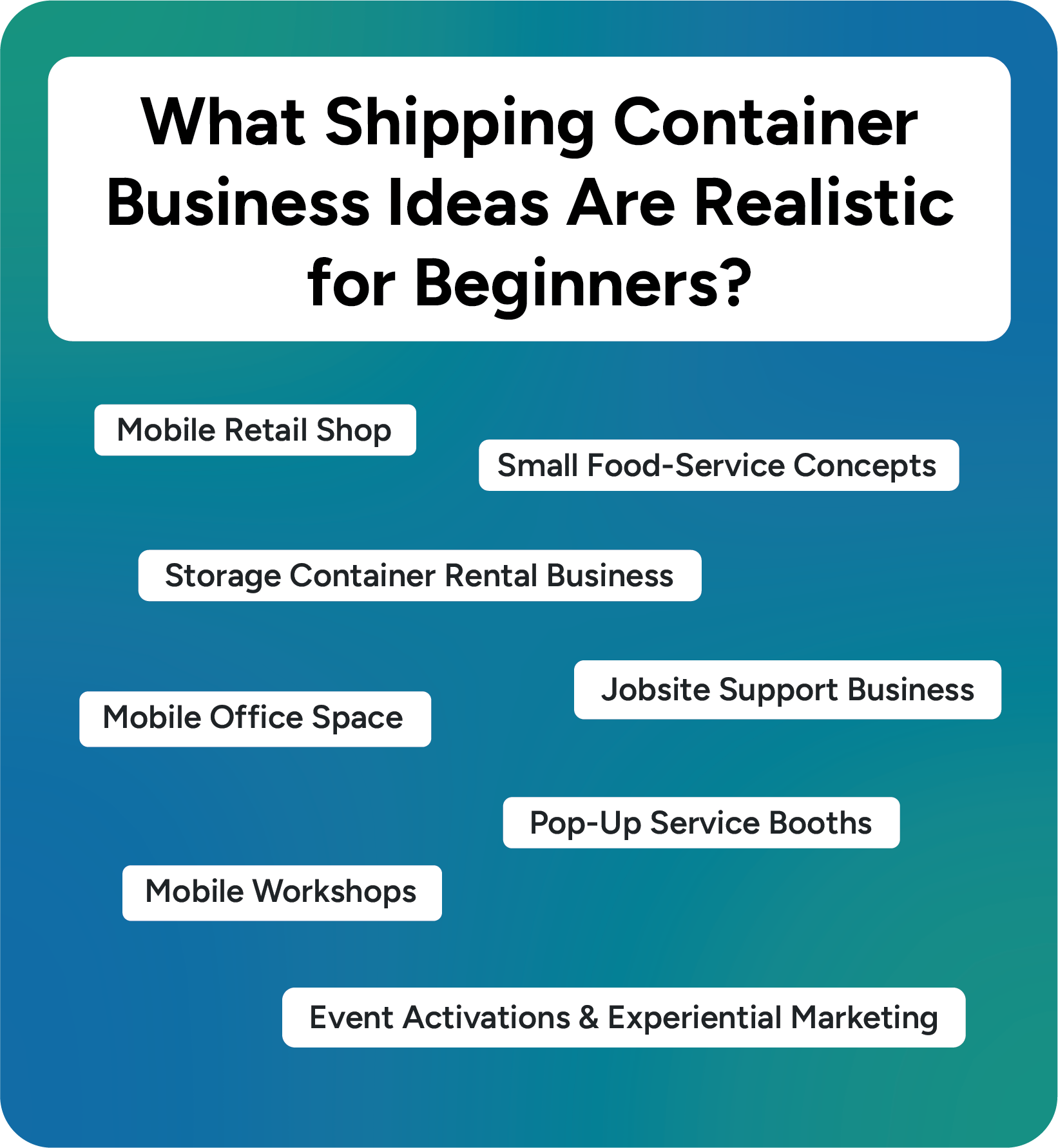
The best shipping container business ideas for beginners combine manageable startup costs with straightforward operations and room to grow.
Below are several practical container business ideas and what it takes to get started.
Mobile Retail Shop
A container retail store can serve as a boutique, specialty shop, outdoor gear store, gift shop, or seasonal retail operation.
What You'll Need
- Shipping container
- Retail fixtures
- Shelving
- Point-of-sale system
- Signage
Equipment That Matters First
- Retail displays
- Inventory management tools
- Payment processing equipment
Planning Hurdles
- Site approval
- Customer access
- Parking considerations
- Utility connections
Revenue Potential
Revenue depends on product selection, location, and customer traffic. Retail concepts often benefit from lower occupancy costs compared to traditional storefronts.
Small Food-Service Concept
Food-service containers have become increasingly popular because they can provide a unique customer experience while requiring less space than a traditional restaurant.
What You'll Need
- Container modifications
- Food preparation equipment
- Ventilation systems
- Refrigeration
Equipment That Matters First
- Commercial kitchen equipment
- Point-of-sale systems
- Food storage equipment
Planning Hurdles
- Health department approvals
- Utility requirements
- Food-service permits
Revenue Potential
Food concepts can generate strong revenue when paired with a high-traffic location and an efficient menu.
Storage Container Rental Business
Storage rentals remain one of the simplest ways to enter the shipping container industry.
What You'll Need
- Container inventory
- Storage yard
- Delivery capabilities
Equipment That Matters First
- Transportation resources
- Security systems
- Inventory management tools
Planning Hurdles
- Zoning compliance
- Site security
- Transportation logistics
Revenue Potential
Recurring rental income can provide consistent monthly cash flow and predictable revenue.
Jobsite Support Business
Construction companies regularly need storage, office space, and operational support on job sites.
What You'll Need
- Containers
- Delivery resources
- Security upgrades
Equipment That Matters First
- Material handling equipment
- Transportation solutions
- Locking systems
Planning Hurdles
- Delivery scheduling
- Inventory management
- Construction industry relationships
Revenue Potential
Construction customers often require long-term rentals and repeat services.
Mobile Office Space
Portable office containers continue to grow in popularity among contractors, utility providers, and industrial companies.
What You'll Need
- Insulated container
- Electrical service
- HVAC systems
- Office furnishings
Equipment That Matters First
- Climate control equipment
- Office technology
- Connectivity solutions
Planning Hurdles
- Utility installation
- Permit requirements
- Occupancy regulations
Revenue Potential
Office containers often command higher rates because of their added functionality.
Pop-Up Service Booths
Many entrepreneurs use containers to provide customer-facing services.
Examples include:
- Ticket sales
- Equipment rentals
- Information centers
- Visitor services
What You'll Need
- Customer-facing design
- Branding elements
- Technology systems
Equipment That Matters First
- Payment systems
- Customer service equipment
- Connectivity tools
Planning Hurdles
- Location agreements
- Event coordination
- Utility access
Revenue Potential
Success often depends on location and customer volume.
Mobile Workshops
Containers can serve as secure, organized workspaces for service-based businesses.
What You'll Need
- Interior workstations
- Storage systems
- Power solutions
Equipment That Matters First
- Industry-specific tools
- Fabrication equipment
- Storage solutions
Planning Hurdles
- Workflow planning
- Utility requirements
- Transportation considerations
Revenue Potential
Mobile workshops can support service businesses that generate recurring customer revenue.
Event Activations and Experiential Marketing
Brands increasingly use containers for marketing events and temporary activations.
What You'll Need
- Attractive container design
- Branding elements
- Event equipment
Equipment That Matters First
- Display systems
- Audiovisual equipment
- Promotional materials
Planning Hurdles
- Event scheduling
- Transportation logistics
- Local permits
Revenue Potential
Projects can generate substantial revenue, especially when working with corporate clients and recurring events.
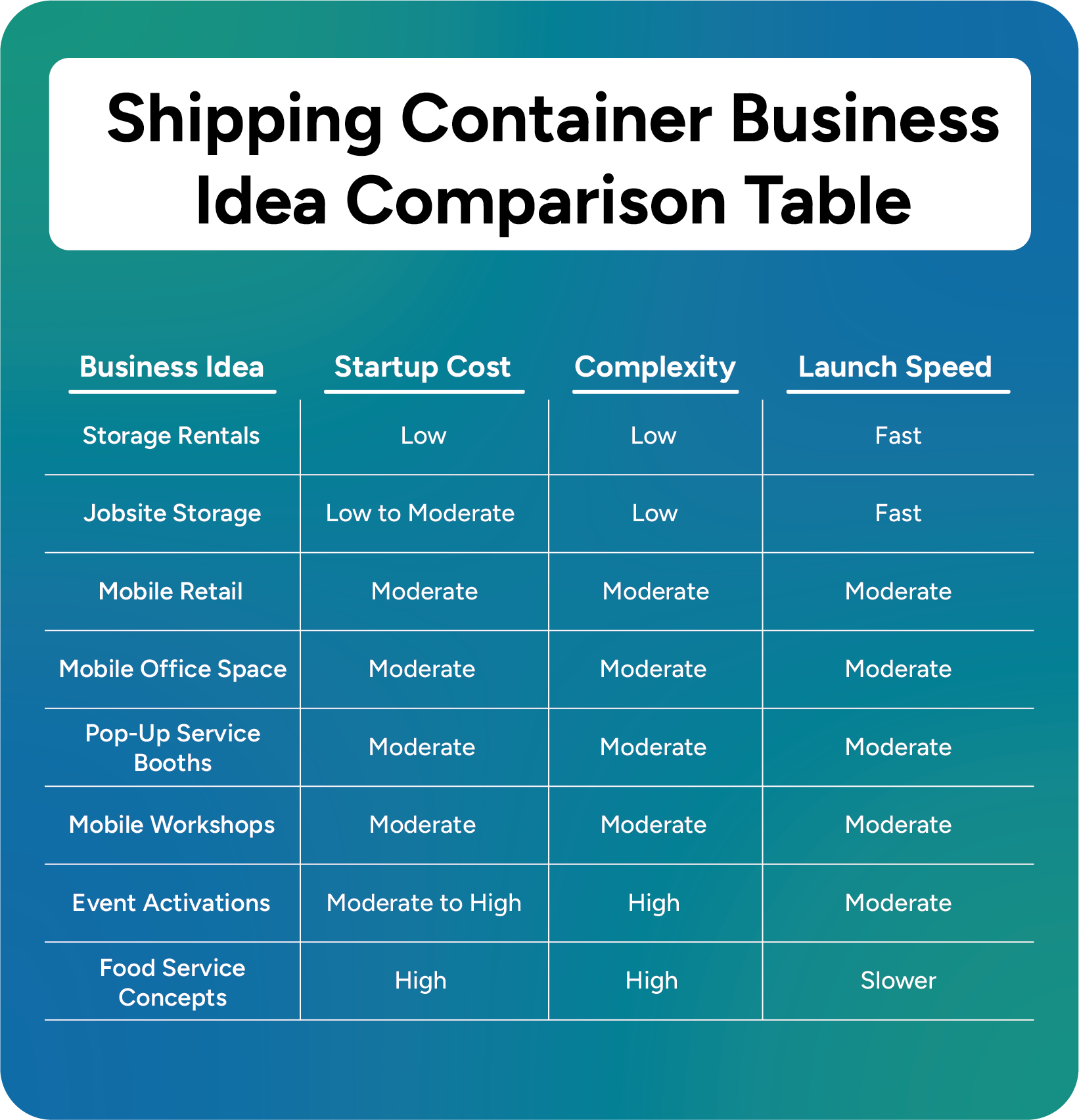
Shipping Container Business Idea Comparison Table
What Equipment Do Container Businesses Need?
The exact equipment depends on the business model, but several categories appear frequently across container-based operations.
Common equipment needs include:
- HVAC systems
- Electrical equipment
- Material handling equipment
- Retail fixtures
- Commercial kitchen equipment
- Office technology
- Fabrication equipment
- Security systems
- Storage solutions
- Point-of-sale systems
For many startups, equipment becomes one of the largest investments after the container itself.
How Much Planning Is Needed Before Launching?
Successful container businesses require more planning than many first-time entrepreneurs expect.
Areas to evaluate include:
Location
- Site suitability
- Customer accessibility
- Parking availability
- Delivery access
Utilities
- Power requirements
- Internet access
- Water service
- Waste management
Permits
- Business licenses
- Zoning approvals
- Occupancy requirements
- Industry-specific regulations
Equipment
- Operational equipment
- Technology needs
- Safety requirements
The more planning completed before launch, the fewer surprises entrepreneurs typically encounter during setup.
How Commercial Equipment Leasing Can Help New Entrepreneurs Start Faster
One challenge many entrepreneurs face is balancing startup costs while preserving cash for marketing, inventory, payroll, and daily operations.
Commercial equipment leasing can help businesses access revenue-producing equipment while keeping more capital available for other priorities.
This may be especially valuable when a container project requires:
- HVAC systems
- Material handling equipment
- Fabrication equipment
- Commercial kitchen equipment
- Retail equipment
- Business-use technology
Rather than delaying a launch while saving for every equipment purchase, some entrepreneurs explore leasing options that allow them to put equipment into service sooner.
Clicklease: Helping Entrepreneurs Launch With Confidence
For many new business owners, equipment is essential to opening the doors and serving customers. Whether you're building a container-based workshop, retail store, office, or food-service concept, access to equipment can directly impact launch timelines.
Clicklease helps businesses access revenue-producing equipment through commercial equipment leasing with fixed lease terms that support predictable budgeting and business planning.
By helping entrepreneurs acquire the equipment they need today, Clicklease can support faster project completion and help preserve cash for other startup priorities.
Another Way Clicklease Supports Container-Based Businesses
Many shipping container projects involve more than one equipment purchase. A business may need HVAC systems, point-of-sale equipment, fabrication tools, storage systems, material handling equipment, or other operational assets to become fully functional.
Clicklease works with equipment sellers and business owners to help provide access to business-purpose equipment that supports growth and day-to-day operations.
For entrepreneurs who are building a business from the ground up, fixed lease terms can make it easier to forecast expenses while gaining immediate use of the equipment needed to generate revenue.
To learn more about how Clicklease supports growing businesses, visit Clicklease.com or call 888-509-5592.
Beginner Startup Checklist
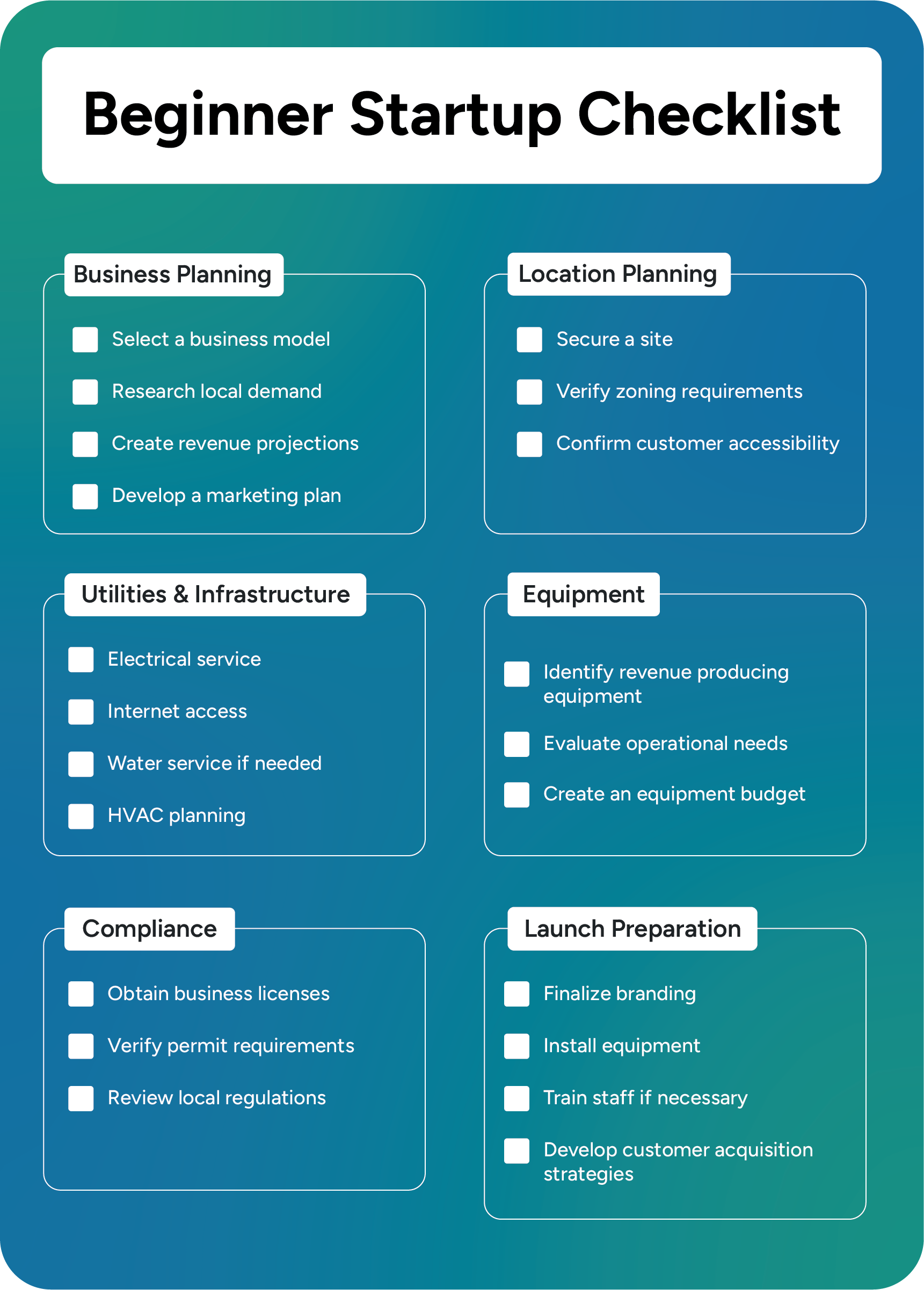
Before launching a container-based business, review the following checklist:
Business Planning
- Select a business model
- Research local demand
- Create revenue projections
- Develop a marketing plan
Location Planning
- Secure a site
- Verify zoning requirements
- Confirm customer accessibility
Utilities and Infrastructure
- Electrical service
- Internet access
- Water service, if needed
- HVAC planning
Equipment
- Identify revenue-producing equipment
- Evaluate operational needs
- Create an equipment budget
Compliance
- Obtain business licenses
- Verify permit requirements
- Review local regulations
Launch Preparation
- Finalize branding
- Install equipment
- Train staff if necessary
- Develop customer acquisition strategies
Start Building Your Container Business
Shipping containers continue to create exciting opportunities for entrepreneurs who want to launch businesses without the cost and complexity of traditional commercial construction.
Whether you're interested in retail, food-service, storage rentals, workshops, offices, or event activations, success typically comes down to careful planning, choosing the right equipment, and understanding customer needs.
By pairing a practical business model with the equipment necessary to operate effectively, entrepreneurs can transform a simple shipping container into a functional, revenue-generating business.
Ready to turn your shipping container business idea into reality? Apply now with Clicklease to get the equipment you need to launch.